Op 21 oktober 2026 begint een filmreeks van vijf films geproduceerd, geregisseerd en geschreven door Pier Paolo Pasolini (1922-1975) in De Uitkijk. Ik zal deze films telkens introduceren (in het Nederlands). Kaartjes zijn te koop!

Op 21 oktober 2026 begint een filmreeks van vijf films geproduceerd, geregisseerd en geschreven door Pier Paolo Pasolini (1922-1975) in De Uitkijk. Ik zal deze films telkens introduceren (in het Nederlands). Kaartjes zijn te koop!
All are invited to the film screenings and workshop entitled Thinking in Film. Research Practices Beyond Representation (see the programme and rationale below).
Following this link, you can register for the film screenings on 1 October, the workshop on 2 October, or both.
1 October, 15.00-18.30 Three Film Screenings in Kartini-zaal, Bushuis/Oostindisch Huis:
2 October, 12.00-18.00 Workshop in Kartini-zaal
Main themes
• Film and migration: moving images as a way of grappling with displacement, circulation, and transnational lives
• Film and archives: re-activating, re-editing, or re-reading archival materials
• Film and theory: cinematic thinking as a philosophical or conceptual practice
• Film and method: experimentation, failure, and process
• Film and pedagogy: research-based teaching and audiovisual inquiry
As this workshop is part of the Chinese Selfies in Europe project, Chinese migration to Europe – already a shared point of reference for some invited contributors – may serve as one productive case study, but the workshop is not thematically restricted to this field.
Format and Contributions
Contributors bring to the workshop various productions:
• Textual (traditional academic papers)
• Audiovisual (short films, fragments)
• Hybrid or experimental formats
The workshop aims to prioritise discussion, collective reflection, and methodological exchange over finished results.
Toward a Shared Vocabulary
Ultimately, this initiative seeks to contribute to a shared, interdisciplinary vocabulary for thinking about film in practice and research, and the blurred boundaries between the practicalities of filmmaking and researching – not as an add–on, but as an epistemic practice that can unsettle established hierarchies between text and image, analysis and creation, method and object.

Behind the scenes of Appunti per un’Orestiade africana (Pier Paolo Pasolini, 1970)

In het HP/De Tijd-zomernummer van 2026 is een artikel gepubliceerd met de titel ‘De eeuwige ziel van Fellini’, geschreven door Willem Pekelder. Hij interviewde mij over de geschiedenis en betekenis van Cinecittà.
Het artikel is ook online te lezen (voor abbonnees): https://www.hpdetijd.nl/cultuur-media/cultuur/48328/de-eeuwige-ziel-van-fellini.
Panel Proposal for the CERPE International Workshop 2026, Hong Kong, Hong Kong Metropolitan University, https://www.hkmu.edu.hk/ss/2026-cerpe-international-workshop/
This is part of the University of Amsterdam’s Chinese Selfies in Europe project.
Laughter is a complex cultural and physical phenomenon. It can release tensions and reveal ideas or feelings that remain otherwise unspoken, whether individually – through the partial lifting of repression, as described by Freud – or collectively – through shared forms of social and folkloric laughter, as theorised by Bakhtin. Either way, laughter is profoundly shaped by cultural context. What counts as humorous, when laughter is appropriate, and who becomes its target are governed by social codes that audiences learn and recognise.
Yet humour – much like human beings – rarely remains confined to the cultural contexts in which it originates. Jokes, comedic performances, and humorous narratives circulate across languages, media, and geographical spaces. When they do, their meanings may shift in unpredictable ways. Cultural references may become opaque, stereotypes may be reinforced or transformed, and audiences may interpret the same ‘joke’ differently depending on their social and cultural position.
This panel will ask: what happens with laughter when it travels? How do humour and comedic forms change when they move across linguistic, cultural, and geographical boundaries? And how are culturally specific codes – such as forms of ‘Chineseness’ and ‘Europeanness’ embedded in humour – reconfigured when audiences, readers, or performers encounter them in new contexts? The focus will be on laughter in and between Chinese and European cultures.
Researching migratory communities and diasporas offers a unique perspective and informs us about how distance from home is affectively humourised, how leaving one political system translates into satire about state leaders, and how humanity is satirised when encountering racism in a new host society. Studying translations of humorous (literary) texts, comedic series, films, memes, etc, can furthermore enlighten us about whether, and in what way, laughter in translation can create a space of ‘cultural coevalness’ (following Chow, 2014).
Possible topics include, but are not limited to:
Please send your proposal (250 words) and a short bio (100 words) to Linde Luijnenburg and Rui Huang by 26 March 2026.
As part of the ARTES Film Lab, you are all invited to join us for three screenings of Hungarian contemporary films which all discuss the theme of education. After a short introduction by Betti Bodò and myself, the films will be screened. Afterwards, there will be drinks and snacks and time for a discussion. As we are co-writing an article on these three films, we welcome input and suggestions. (See below for more information about the article.)
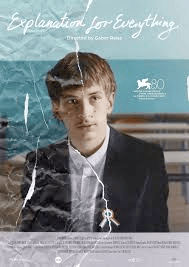
Magyarázat mindenre (Explanation for Everything, Gábor Reisz, 2023)
Date: 13/02/2026, 15:00 – 18:00
Room: PCH 1.05
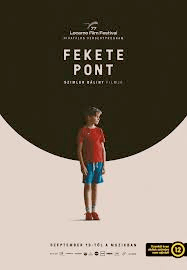
Fekete pont (Lesson Learned, Bálint Szimler, 2024)
Date: 27/02/2026, 12:00 – 15:00
Room: PCH 1.04
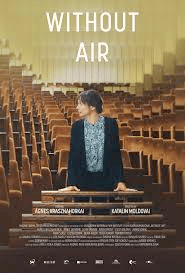
Elfogy a levegõ (Without Air, Katalin Moldovai, 2023)
Date: 06/03/2026, 12:00 – 15:00
Room: PCH 1.04
Background information
In the upcoming article, we examine particular scenes from these three internationally lauded feature films, with a focus on their portrayals of authoritarian systems through the theme of education. The theoretical framework is based on the notion of ‘Culture War’ as described by Zsolt Győr (2024). We argue that Hungarian cinema offers a transnationally legible cinematic reading of authoritarianism, and that education functions as a key cinematic trope of (understanding) illiberal governance.
We will 1) travel through time and space by recognising recurring themes in European moviemaking practices of twentieth and twenty-first century illiberal/authoritarian political systems, 2) address the current role of Budapest as an important filmmaking hub in the Eastern European region, 3) consider film a crucial medium for understanding these political tendencies, 4) identify the cinematic trope of ‘education’ (and a specific set of sub-themes) as a key to depict and decipher nationalist political strategies and its illiberal effects on citizens and artists specifically, 5) interrogate how these films resonated with Western audiences in their representation of illiberal narratives, and lastly, 6) with the addition of interviews with the filmmakers, propose to read this article as a discursive practice, continuing the discussion that follows the viewing process.
All welcome! Please send us an email.
Het prachtig vormgegeven tweede nummer van 2025 van het tijdschrift Roma Aeterna, geheel geweid aan Rome en cinema, is inmiddels online te koop. Ik schreef er een artikel voor, waarin ik de mythevorming van Rome en Fellini in – en rondom – drie films van Federico Fellini bespreek: Lo sceicco bianco, La dolce vita, en Roma.
Hier is meer informatie te vinden.

Naar aanleiding van een speciale film-editie van het tijdschrift Roma Aeterna zal ik op 12 december in het Plantage Paleis (Nieuwe Herengracht 99hs te Amsterdam) met Elio Baldi en Tamara van Kessel in gesprek gaan over Federico Fellini en/in/over Rome. Meer informatie is hier te vinden.
Na afloop is er vanaf 21:00 uur een borrel bij Café Waterlooplein 77.

On the website of the research project Chinese Selfies in Europe, PhD student Rui Huang and I reflect on the kick-off event and screening of This is Not Chinatown.

On Tuesday May 27, 2025, from 19.00-21.00 hrs, the Amsterdam School for Cultural Analysis (ASCA), in collaboration with the Research Centre for Migration (ARC-M), Centre for Urban Studies (CUS), Expertise Centre Humanitarian Communication (HUCOM), UvA research project Chinese Selfies in Europe, Alumni Circle Media Studies and BuzzHouse UvA, will host a screening of the documentary This Is Not Chinatown: The Experience of Chinese Students in the International Student City of Amsterdam. Following the screening of this short film, there will be a panel discussion with the researchers, film makers, and participants. Registration for this event is required.
Date: Tuesday, May 27, 2025
Time: 19.00-21.00 hrs (with drinks from 21.00-22.00 hrs!)Location: VoxPop, BG3 (Binnengasthuisstraat 9, 1012 ZA Amsterdam)
Film: This Is Not Chinatown: The Experience of Chinese Students in the International Student City of Amsterdam (2025)
Language: English
Panelists: Maggi Leung, Linde Luijnenburg, Rui Wuang and Emiel Martens (see their bios below)
Email: E.S.Martens@uva.nl
More information can be found here: https://chineseselfiesineurope.com/events/.
All welcome!

Op 10 april om 20.00 geef ik een lezing over postkoloniale theorie in een aantal films die behoren tot de commedia all’italiana. Meer informatie is hier te vinden.

Still Oggi, domani, dopodomani (Marco Ferreri, Luciano Salce, Eduardo De Filippo, 1965)

Still Riusciranno i nostri eroi a ritrovare l’amico misteriosamente scomparso in Africa? (Ettore Scola, 1968)